
Create A Beautiful Body With Accountability
I think accountability, which is the act of being responsible for one’s self, is a practice and depending on where we start and how well we know ourselves, it’s a process.
According to Brene Brown accountability is connected to courage. She explains since accountability opposes blame, we can see how not having accountability can keep us in a victimhood state of mind. One that paralyzes us and keeps us in shame without being able to move forward and find resolution.
I’ve gone through this myself and with many of my clients. Accountability is hard and most of the time we need someone to walk us through it if we’re not sure where to start.

I think accountability, which is the act of being responsible for one’s self, is a practice and depending on where we start and how well we know ourselves, it’s a process.
According to Brene Brown accountability is connected to courage. She explains since accountability opposes blame, we can see how not having accountability can keep us in a victimhood state of mind. One that paralyzes us and keeps us in shame without being able to move forward and find resolution.
I’ve gone through this myself and with many of my clients. Accountability is hard and most of the time we need someone to walk us through it if we’re not sure where to start.
The most uncomfortable part is finding the courage to be honest with yourself about what is or isn’t working. I’ve been in denial about what’s not working more times than I can count. Sometimes it takes a little push from the people who care about me most, but when I can be honest with myself and begin to take steps toward what could work, I find my life shifts into alignment.
When you stop hustling and guessing you can begin to make decisions that are based on your values. When you give yourself space to slow down and to reflect then you’re better able to make decisions from a place of awareness rather than not.
Coming from this place of awareness is incredibly helpful in shaping a foundational plan that’s based on your values (not someone else’s)
You no longer have to guess, self criticize or get frustrated because things aren’t working. Instead you come from a place of knowing what works and what doesn’t so that you can start moving toward your goal.
But you’ll never know this unless you look at what you’re doing first.
You most likely will make mistakes, but it’s a learning process. If we can avoid attaching ourselves to the shame of messing up and instead realize that messing up is part of the process of learning, our experience can be way more impactful.
Moving forward with courage instead of shame and blame is the first step in holding yourself accountable and trusting yourself again.
Accountability Tools For Success
You don’t even have to participate in extreme dieting tactics if you don’t want to. All you have to do is become aware of how much you take in in relation to how much you move. It’s that simple.
Some people are not taking in enough and some are taking in too much without getting enough movement to offset the calorie intake. Some people are eating too much in one sitting and could benefit from splitting the bigger meals up and spreading them out throughout the day.
What Your tools Will help you see:
Your macronutrients ratios and discover what works best
What vitamins and minerals you’re getting and which ones you may not be getting enough of.
Your food patterns - if you’re eating too much in one sitting or not eating enough.
If you’re eating low quality foods you’ll quickly discover that you’ll not be satisfied with your normal calorie intake.
Tools I Use:
Cronometer - A food logging app. It tracks calorie intake and compares it to how much movement you’re getting each day. This app helps you discover how much you’re taking in comparing to how much you’re expending. Cronometer integrates with Fitbit and offers a paid option of splitting your meals so you can see how much you are eating at each meal. I find this to be incredibly helpful to know.
Fitbit - tracks; hours of sleep, gives you your weekly average weight, daily water intake and movement
Note: If your goal is to lose weight, You want to take your weight everyday first thing in the morning with the same scale. Then take the weekly average. That way you will see a true measure of weight rather than the day to day fluctuation (because you will fluctuate depending on the time of day and where you are in your cycle)
Temp and pulse - Use your temperature and pulse readings to find out how your metabolism is functioning and responding to changes you are making.
Mood - Your mood will always give you an indication of how your physiology is working. It will also tell you if you’re not getting enough energy or if you have tons of energy.
If you want to learn more about how I teach my clients to build a foundation of fitness and nutrition so they can live the life they love in the body they love contact me today for a free 30 minute consultation.

It's Time To Rethink Optimal Health
TIn was 2004 I was at the peak of my form as a competitive bodybuilder. My body was sculpted because I'd followed conventional nutrition and training wisdom to a T. I'd cut down to the lowest body fat percentage I’d ever been and I had a physique that most people would die for but yet I was miserable. I felt tired, depleted and depressed.
This wasn’t how it was supposed to be. I’d lost weight, yes, but I’d also lost my energy and vitality. Something was clearly off. How could my body look so good, and yet I felt so bad?
In was 2004 I was at the peak of my form as a competitive bodybuilder. My body was sculpted because I'd followed conventional nutrition and training wisdom to a T. I'd cut down to the lowest body fat percentage I’d ever been and I had a physique that most people would die for but yet I was miserable. I felt tired, depleted and depressed.
This wasn’t how it was supposed to be. I’d lost weight, yes, but I’d also lost my energy and vitality. Something was clearly off. How could my body look so good, and yet I felt so bad?
The answer, it turns out, is that the fundamental thesis of the fitness and nutrition industry is flawed.
WE'VE COMPLETELY LOST SIGHT OF WHAT REALLY MATTERS IN HEALTH
Weight loss is the dominant focus of our nutrition and diet conversations. Doctors are reminding you to lose weight, reality TV makes weight loss look desirable and quick, experts promise you that you can lose the weight fast if you buy their system and the supplement industry convinces you that their product is more nutrient dense than food.
The problem with these so called "solutions" to weight loss is that weight loss is only a small part of the puzzle and quite frankly sustainable weight loss (without lean muscle mass loss) only comes when you have a sound nutrition foundation and a healthy metabolism.
There's so much more to health than losing weight, yet we place all the importance on weight loss. There's no better realization to this as to when you've tried everything and nothing works anymore. You can even be in the "best shape" of your life and still feel miserable.
You're missing the mark on the real reason you're not losing weight. That foundation doesn't come by cutting macronutrients, fasting, supplementing, working out hard, detoxing or drinking green smoothies. These short term "solutions" come with risky long term side effects and will slow down your metabolism over time.
Unfortunately the nutrition industry leads most people to believe that the end result (weight loss) is the journey when it's only a byproduct of a high functioning metabolism when done right.
Since sustainable weight loss is a result of a healthy metabolism, you simply can't lose weight first to get healthy.
The truth is, weight loss is something that comes as a result of a pro-metabolic nutrition and fitness practice. One that focuses on long term health building as opposed to a quick fix plan that won't last, leaving you more depleted than when you started.
It's not about starvation, it's about building energy reserves with the right nourishment with food that's accessible and digestible.
IT’S TIME TO DROP THE FAD DIETS AND EMBRACE OPTIMAL HEALTH:
What if we thought about it differently. What if instead of depleting the body of it's resources to lose weight or making the therapy more complicated, we approached nutrition as a means of supporting the body's recovery process so that your body could do the job it was meant to do naturally.
We call this approach Optimal Health. Optimal health is characterized by these three markers:
“I was in the best shape of my life. Why did I feel miserable?”


Abundant Energy: You have enough energy to do what you want in life (taking care of self and living your dream) and to give to others (service to others, contributing to your community, parenting, etc.). This also includes your libido. Your sexual drive is a good indicator of your energy level.
Regenerative Capacity: Your ability to recover and regenerate is swift. Your injuries may not heal as fast as Wolverine's does but they do heal at a natural rate. You’re recovering from your workouts without too much soreness (or none at all). You don’t get sick too often but when you do you’re not sick for more than a day or two. You're not seeing signs of premature aging (muscle deterioration, hair loss, wrinkles, low libido, etc.) and you're sleeping soundly and throughout the night.
A Healthy Disposition: You have a consistent grounded mood and your outlook on life is balanced. You wake up excited about your day. You're able to handle most stressful situations without feeling overwhelmed and irritable, but instead with patience. You respond instead of react.
This is a radical shift from the dominant weight loss mentality, but it doesn’t mean weight loss isn’t part of the equation. It just means that weight loss will happen in a sustainable way when the body is healthy enough to let go of body fat (not muscle mass) for good.
HOW DO WE GET TO OPTIMAL HEALTH?
In order to understand how we support our body in this process we have to understand how our bodies work at the cellular level. Simply put, energy maintains structure and function at the cellular level. Since your body depends on a constant energy source for structure and function, not fueling your body with enough frequency and accessible nutrients will lead to degeneration.
If we look at how our body regulates our temperature, circulation, our mood and our ability to recover from stress we can figure out what our body is missing. Once we discover this it can only lead to faster recover, more energy and a positive outlook on life, aka, more fun.
If you continue to use more energy than you take in you run into issues like fatigue, autoimmune response, inflammation, nagging injuries, a slow metabolism, slow digestive motility, depression, weight gain and the list goes on. It doesn't matter if the energy is used in a workout or sitting at the computer it's all the same to your body because you're using energy for all of it.
And certainly your body will not prioritize when it comes to aging (like hair loss, grey hair or wrinkles), your body has bigger priorities. It'll conserve your energy and use it for more important jobs like pumping the heart and feeding the brain.
The truth is our bodies have a high capacity to regenerate at any age, as long as we are living and creating new tissue, we can recover. A body that's low in energy and is not receiving the nourishment to recover will stay in a constant state of inflammation or injury. But if you have the energy reserves to make new tissue your aging slows and your injuries and inflammation get better because your body now has something to work with.
So how do we practically support this and integrate it into our lives? We do it through:
The right kind of food practices
The right amount and kind of movement
Giving our bodies enough rest.

So why trust me... because I've been there and I've lived it. I was in the best shape of my life and felt miserable. I was depleted energetically and nutritionally with nothing left to give. Like many people I talk to, I felt tired, depressed and out of ideas about what to do next because I'd tried every type of elimination diet that I thought might work.
Then I started to study and really understand how the body works at the cellular level. I found life can be so much easier if you can support our body in it's natural processes, support it so it can do it's job better. So I did intensive research and tested ideas on myself and when they worked, I shared my practices with my clients.
As a result I've seen phenomenal results from myself and countless others.
Getting to know your own body's physiology and nutrient needs will give you a clear direction and create focused specific steps you can take to create a body you feel great in.
If you're interested to learn more about Optimal Health,
Sign up for my Creating Your Food Foundation online course here.
Dairy's Not So Scary
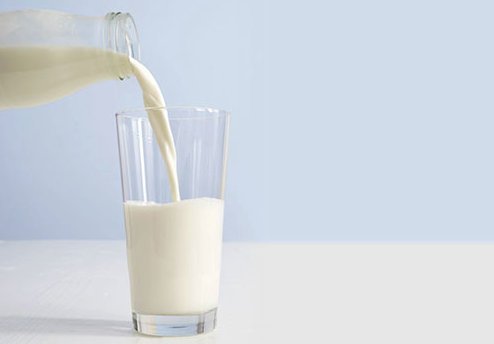
Food sensitivities are a big deal and it seems the amount of people with food sensitivities are growing every day. Since many issues are linked to food sensitivities, food elimination seems to be the most common approach, but I think there's so much more to consider first.
Food sensitivities are a big deal and it seems the amount of people with food sensitivities are growing every day. Since many issues are linked to food sensitivities, food elimination seems to be the most common approach, but I think there's so much more to consider first.
How Food Elimination Works
A food elimination diet works by taking the foods out of the diet that seem to be causing digestive distress for a certain period of time and then working the foods back into the diet one at a time, noticing any change in digestion during the process. While this gives a person temporary relief, it doesn't really address the bigger issue... why can't this person digest and metabolize their food? In other words, what's the root of the problem.
My Experience With Dairy Intolerance
Years ago I believed I was intolerant to dairy, but looking back on it, I had a blood sugar handling issue. I'd been eliminating so many foods and I remember feeling like I needed to make a switch with my approach, but I wasn't sure where to go since the only recommendations about inflammation were to eliminate the foods that are causing you distress. Losing inches initially was great, because inflammation would go away, but I was still feeling fatigued and run down all the time. I felt like I was missing something, I wasn't feeling good anymore and had zero energy. I eventually had to come to accept that my approach wasn’t working for me anymore and it was time to make a change.
Could the issue be blood sugar?
Soon after I was introduced to Ray Peat’s research and it simply blew my mind. Mainly because his ideas about nutrition were so hard to wrap my head around and so completely opposite to what I'd learned about nutrition. I remember thinking I could eat dairy and sugar again, how liberating, but how does that work? After a while, his ideas started to make sense and I was soon compelled to try it out on myself.
I realized I'd had a blood sugar handling issue the whole time. It wasn't diary's fault, it was my body not being able to metabolize natural sugars very well for energy. I discovered when I eliminated sugar I felt a lot better at first and many of my issues subsided, but after a while I started to run out of energy, my metabolism slowed down( I lost muscle) and many of my issues came back. I didn’t gain weight per say, instead my digestive motility slowed down, I developed a small pooch (distended belly) and I was tired and depressed.
What I found...
According to Dr. Peat, food intolerance lab tests are a vague indicator of an actual food intolerance. Mainly due to the fact that your immunity responds to everything you're exposed to. Finding the particular antibodies to that substance actually means that you've become tolerant to that food, not the other way around. Because of this, most blood tests end up being a very poor indicator of a food intolerance.
Other Reasons For A Perceived Dairy Intolerance
According to Dr. Ray Peat, dairy’s not the problem, it’s the degradation of our food supply, and I tend to agree. If you’re eating toxic food with preservatives, there’s a greater chance you’ll end up with food allergies, sensitivities, bloating, gas, vitamin D deficiency, parasites, etc. Even if you’re eating organic you can still get some toxic preservatives that may irritate and inflame your body.
In Kate Deering's book, "How To Heal Your Metabolism", she states that it's a matter of the kind of dairy you choose which determines if you're intolerant or not. The culprit may actually be the preservatives and not the milk itself. One harmful allergen that's added frequently to dairy, almond and coconut milk is carrageenan. This preservative originates from seaweed and can cause digestive distress and inflammation. I also found carrageenan in foods like soy milk, ice cream and yogurt, it’s in just about everything.
Poor blood sugar regulation can be another reason for food intolerance. According to Dr. Ray Peat, you have the potential to be sensitive to just about any food when you're in a state of low blood sugar. A solution to a food sensitivity can be as simple as keeping your blood sugar more regular on a daily basis, by eating more frequently, slowing down (make mealtime sacred), calming the nervous system before meals and chewing your food. Breathing more mindfully (taking your breath in through the nose and expanding your ribcage and diaphram) and including a daily meditation practice can even improve your ability to digest your food.
dairy is a nutrient dense food
Dairy contains a balanced ratio of phosphorus (essential mineral for bone development) and calcium (needed for healthy bones, nerve function, blood clotting, muscle and heart contractions). According to Kate Deering, this is important because the ratio of phosphorus to calcium in dairy aids in calcium absorption and that's why including dairy in the diet is so important as you get older. Even more so since we're more susceptible to osteoporosis as we age. The good news is we can essentially side step this issue if we're absorbing calcium properly which dairy can provide.
Dairy's incredibly nutrient dense and a complete food, providing all three macronutrients (protein, fat and carbohydrates) your body needs to metabolize your food and keep your blood sugar regulated. Dairy contains magnesium, potassium, selenium and iron, vitamins A, B2, B12 K and D. These vitamins and minerals are all needed for a healthy fully functioning metabolism.
This superfood is worth reconsidering.
References:
http//www.eastwesthealing.com
http//www.katedeeringfitness.com
"How To Heal Your Metabolism", by Kate Deering pg.141-142