
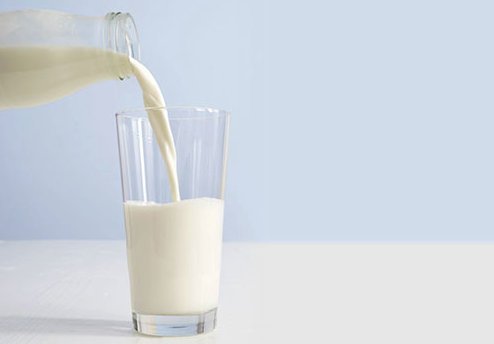
Dairy's Not So Scary
Food sensitivities are a big deal and it seems the amount of people with food sensitivities are growing every day. Since many issues are linked to food sensitivities, food elimination seems to be the most common approach, but I think there's so much more to consider first.
Food sensitivities are a big deal and it seems the amount of people with food sensitivities are growing every day. Since many issues are linked to food sensitivities, food elimination seems to be the most common approach, but I think there's so much more to consider first.
How Food Elimination Works
A food elimination diet works by taking the foods out of the diet that seem to be causing digestive distress for a certain period of time and then working the foods back into the diet one at a time, noticing any change in digestion during the process. While this gives a person temporary relief, it doesn't really address the bigger issue... why can't this person digest and metabolize their food? In other words, what's the root of the problem.
My Experience With Dairy Intolerance
Years ago I believed I was intolerant to dairy, but looking back on it, I had a blood sugar handling issue. I'd been eliminating so many foods and I remember feeling like I needed to make a switch with my approach, but I wasn't sure where to go since the only recommendations about inflammation were to eliminate the foods that are causing you distress. Losing inches initially was great, because inflammation would go away, but I was still feeling fatigued and run down all the time. I felt like I was missing something, I wasn't feeling good anymore and had zero energy. I eventually had to come to accept that my approach wasn’t working for me anymore and it was time to make a change.
Could the issue be blood sugar?
Soon after I was introduced to Ray Peat’s research and it simply blew my mind. Mainly because his ideas about nutrition were so hard to wrap my head around and so completely opposite to what I'd learned about nutrition. I remember thinking I could eat dairy and sugar again, how liberating, but how does that work? After a while, his ideas started to make sense and I was soon compelled to try it out on myself.
I realized I'd had a blood sugar handling issue the whole time. It wasn't diary's fault, it was my body not being able to metabolize natural sugars very well for energy. I discovered when I eliminated sugar I felt a lot better at first and many of my issues subsided, but after a while I started to run out of energy, my metabolism slowed down( I lost muscle) and many of my issues came back. I didn’t gain weight per say, instead my digestive motility slowed down, I developed a small pooch (distended belly) and I was tired and depressed.
What I found...
According to Dr. Peat, food intolerance lab tests are a vague indicator of an actual food intolerance. Mainly due to the fact that your immunity responds to everything you're exposed to. Finding the particular antibodies to that substance actually means that you've become tolerant to that food, not the other way around. Because of this, most blood tests end up being a very poor indicator of a food intolerance.
Other Reasons For A Perceived Dairy Intolerance
According to Dr. Ray Peat, dairy’s not the problem, it’s the degradation of our food supply, and I tend to agree. If you’re eating toxic food with preservatives, there’s a greater chance you’ll end up with food allergies, sensitivities, bloating, gas, vitamin D deficiency, parasites, etc. Even if you’re eating organic you can still get some toxic preservatives that may irritate and inflame your body.
In Kate Deering's book, "How To Heal Your Metabolism", she states that it's a matter of the kind of dairy you choose which determines if you're intolerant or not. The culprit may actually be the preservatives and not the milk itself. One harmful allergen that's added frequently to dairy, almond and coconut milk is carrageenan. This preservative originates from seaweed and can cause digestive distress and inflammation. I also found carrageenan in foods like soy milk, ice cream and yogurt, it’s in just about everything.
Poor blood sugar regulation can be another reason for food intolerance. According to Dr. Ray Peat, you have the potential to be sensitive to just about any food when you're in a state of low blood sugar. A solution to a food sensitivity can be as simple as keeping your blood sugar more regular on a daily basis, by eating more frequently, slowing down (make mealtime sacred), calming the nervous system before meals and chewing your food. Breathing more mindfully (taking your breath in through the nose and expanding your ribcage and diaphram) and including a daily meditation practice can even improve your ability to digest your food.
dairy is a nutrient dense food
Dairy contains a balanced ratio of phosphorus (essential mineral for bone development) and calcium (needed for healthy bones, nerve function, blood clotting, muscle and heart contractions). According to Kate Deering, this is important because the ratio of phosphorus to calcium in dairy aids in calcium absorption and that's why including dairy in the diet is so important as you get older. Even more so since we're more susceptible to osteoporosis as we age. The good news is we can essentially side step this issue if we're absorbing calcium properly which dairy can provide.
Dairy's incredibly nutrient dense and a complete food, providing all three macronutrients (protein, fat and carbohydrates) your body needs to metabolize your food and keep your blood sugar regulated. Dairy contains magnesium, potassium, selenium and iron, vitamins A, B2, B12 K and D. These vitamins and minerals are all needed for a healthy fully functioning metabolism.
This superfood is worth reconsidering.
References:
http//www.eastwesthealing.com
http//www.katedeeringfitness.com
"How To Heal Your Metabolism", by Kate Deering pg.141-142
Re-Visiting The Deep Squat
Did you know that squatting is your natural version of sitting? Before chairs, squatting was a natural position to rest, give birth, cook, eat, create art and take a bowel movement. Sitting in chairs is a fairly new phenomenon compared to how long humans have been squatting.
I remember as a new mom years ago I would try to get my toddler boys to sit in little Ikea chairs I had bought for them thinking how cute it would be, but they never would. My boys would always opt for the floor and would squat while playing. I don’t think it’s our natural inclination to sit in chairs.
Your ability to squat can determine your ability to eliminate, detox, move your spine and strengthen your pelvic floor. We rarely think about squatting as a part of our everyday movement medicine, but the truth is you really can’t function well without it.

Did you know that squatting is your natural version of sitting? Before chairs, squatting was a natural position to rest, give birth, cook, eat, create art and take a bowel movement. Sitting in chairs is a fairly new phenomenon compared to how long humans have been squatting.
I remember as a new mom years ago I would try to get my toddler boys to sit in little Ikea chairs I had bought for them thinking how cute it would be, but they never would. My boys would always opt for the floor and would squat while playing. I don’t think it’s our natural inclination to sit in chairs.
Your ability to squat can determine your ability to eliminate, detox, move your spine and strengthen your pelvic floor. We rarely think about squatting as a part of our everyday movement medicine, but the truth is you really can’t function well without it.
Squatting may be more important than we thought. It’s essential for many bodily movements and functions, like hip mobility, circulation, organ function, fluid movement, pelvic floor strength, for lifting restrictions, elimination, spinal and lymphatic circulation and pumping nutrition throughout the body.
According to Katy Bowman in, “Move Your DNA”,
“Squatting is a non-negotiable ingredient to improving issues with the gut, pelvis, hips and knees. The problem, you see, is not the squat but that we haven’t squatted for the bulk of our lives.”
Sitting in chairs for long periods of time has recently been proven to be more hazardous to your health than smoking. This is a big deal. One reason for this could be that sitting actually makes it so your body no longer has to hold itself up anymore, which means your postural muscles stop working for you. Over time if you sit in the same position enough your body begins to conform into whatever position you sit most in. This creates lots of restrictions, which can lead to stagnation and disease.
I’ve found that sitting on the floor from time to time can actually stimulate your posture muscles enough to start working again. Although it may be uncomfortable at first over time your body gets stronger and you get used it it. In addition to this, working on your squat every day will benefit your health greatly and get you moving in the right direction. Your body needs variety, different positions as well as circulation through walking.
My journey with the squat has been 20 years in the making. It’s only the last 3 years that I’ve been able to really make any headway with it. Up until recently, I had limited myself in my range of motion in my squats, accepting that my knee and ankle were restricted in ways that I would just have to live with for the rest of my life.
A little history on my body…
As an athlete, i’ve experienced total knee reconstruction, a spinal stress fracture, two ankle surgeries and three broken ankles. As a mom, I’ve experienced two child births, an epidural that came with intense digestive distress afterwards, diastasis recti (separation of the rectus abdominis facia) , disbiosis and a disc bulge in the SI/L5 region. After all this, most would consider it a miracle that I can even do a deep squat much less live without restriction and pain.
I started to make movement apart of my day by incorporating my pre-squat exercises which are essential if you sit most of the day and wear any shoes with rigidity and height to them.
Here’s some you can start with…
After this I began to squat with an object elevating my heals slightly off of the floor in order to get my hips lower to the ground without tucking my pelvis. Since I have quite a lot of restriction in my ankle and knee this helps my hips get the full range of motion they need for circulation and mobility. Unweighted squats, because my heals are not touching the floor.
If your pelvis tends to tuck under when you squat try this exercise to repattern your squat then when the pelvis is where it needs to be try your squat again.
Walking with a thin sole that allowed my toes and feet to spread as I walked helped me open my restricted ankle naturally. Along with doing daily calf stretching and spinal decompression stretching. After this it was much easier to squat like I did when I was a kid, getting on the floor more often and walking with more awareness.
I started to park really far away from my destination and would walk. Even if it mean I would have to carry heavy items or groceries to my car a little further. As well, I’d walk to the bank, grocery store, shops, work and restaurants. Even if it took more time out of my day, that just meant I wouldn’t need to spend that time on a machine doing cardio, etc. Plus it was way more enjoyable and I could make it a part of my day.
I began squatting over the toilet with the help of a Squaty potty. I would squat in the morning to wake my body up, during the day while using my computer or coaching clients and at night to unwind my body at the end of the day. I continued to do my pre-squat work which involved my regenerative exercises (SI joint and hip mobility exercises) and spinal decompression stretches to release any restrictions in the facial chain, specifically the extensors.
This allowed me to settle down into my squat much more comfortably over time. As well, get lower in my hips and deeper in my knee and ankle bend without losing balance or stopping short.
In addition to all of this I slowly worked back to wearing shoes with minimal soles. I was always barefoot when I did gymnastics as well as being barefoot every summer when I was a kid. It felt so natural to go back to this way of being.
During the summer I wore very thin soled workout sandals that would allow me to work the muscles of my feet and feel the surface of the ground better. I walked over pebbles, rocks, grass and concrete. This helped my body and nervous system begin to adapt to different surfaces and absorb the ground with more awareness. As well, it allowed my hips to release because my feet where able to do their job. I also started to work on getting up off of the floor without using my hands. Like this exercise below…
Here I’m working my hip mobility in both internal and external rotation. This really helps to integrate muscles in the hip that have not been turning on as well as make space in the pelvis.
I've broken my ankle three times both in high school and college and the restriction as a result had had a direct effect on my back presenting itself as a disc bulge, because my body had to I adapt to the restriction in the ankle over time.
I use the sumo squat exercise below to activate my outer hips to support bringing my knees out slightly so I'm better able to lift the chest more upright and this helps with ankle mobility.
As I was able to be more present with my gait and squat, I was able to even out my ankle flexion on both sides which made walking, running, squatting and jumping much more pleasant and my back pain free.